PROJECT OVERVIEW
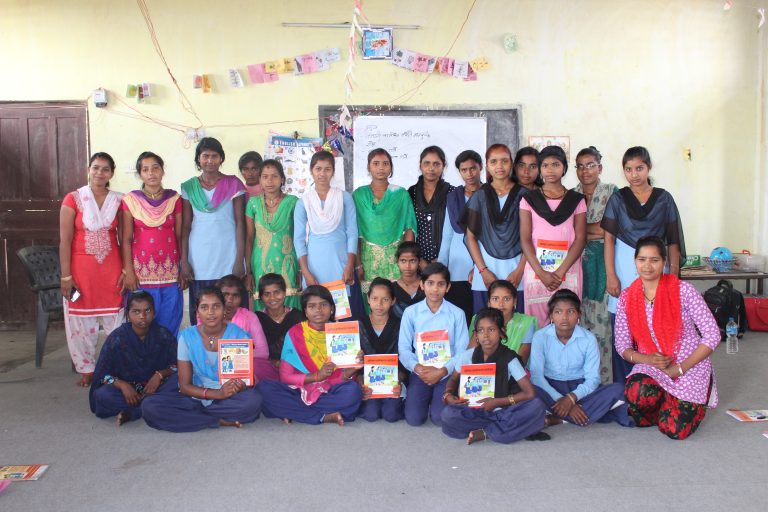
CARE Nepal’s SOAR (Strengthening Opportunities for Adolescent Resilience) model, locally implemented as UDAAN is a proven, holistic intervention designed to support out of school adolescents, particularly girls, in their transition to the formal education system. Unlike conventional academic focused models, SOAR addresses systemic barriers through a multi dimensional approach encompassing academic acceleration, family engagement, community mobilization, and institutional coordination. Over the past five years, this integrated method has achieved a 75% retention rate, considerably outperforming comparable programs.
It has earned widespread endorsement across federal, provincial, and local governments. In 2024, Madhesh Province’s planning commission requested CARE’s technical support in developing a program to institutionalize accelerated learning and submitted a USD 2.2 million proposal to the National Planning Commission. This underscores strong provincial demand and the model’s potential for government led scale up. Additionally, under the USAID funded Adolescent Reproductive Health (ARH) project, Udaan was highlighted as a key success component, leading to considerations for a USD 10 million scale up investment by the U.S. Government. However, due to the abrupt scraping of USAID, the project was stopped. Despite this setback, CARE had already laid out a robust scale out plan in close consultation with the local government, grass root level CSOs and community to mainstream agendas of girls' education into the formal education system by engaging not only academic pathways but also school governance, household dynamics, and broader community actors. The proposed project is a continuation and complementing of the same transformative approach, deepening engagement with Girls’ Rights Forums (GRFs) and UDAAN girls’ parents to mainstream the agenda of out of schoolgirls into formal education system, ensuring their equitable access to quality education through economic empowerment and civic engagement pathways.
CARE is currently operating numerous UDAAN centres in the province, and the government has shown strong interest in scaling up the initiative in the near future. However, financial challenges at households continue to force many girls to drop out of school post transition, as their families are unable to prioritize education over immediate livelihood needs. To address this, we are supporting parents with livelihood initiatives, helping to stabilize households and keep girls in school. The project will support parents of financially vulnerable UDAAN girls to turn into small to medium scale entrepreneurs, sparking broader change in the local economy and thereby creating job opportunities for other poor families so that they could send their girls to school.
To ensure successful scale out, robust advocacy is essential. The Girls’ Rights Forum (GRF)2 has the potential to be a powerful force in advocating for the scale out of UDAAN and promoting girls’ education. However, financial instability limits their capacity to engage in sustained advocacy. By supporting GRF members to become economic entrepreneurs, we not only help them build a stable financial base but also empower them to take on leadership roles in their communities. With this strengthened position, GRF can meaningfully influence policy, hold institutions accountable, and, importantly, challenge and transform harmful social norms at the community level that continue to undermine girls' rights and education.
- Target groups/participants : Girls, young women, parents of Udaan and Girls Rights Forum
- Core strategy and approach: Girls Right
- Key partners and collaborators: WOREC and Utopia
OBJECTIVES
To secure futures of women and girls by enhancing their economic resilience, access to the education and social agency.
Sub-Objectives
- To strengthen the economic resilience of GRF girls and parents of UDAAN girls by equipping them with sector specific job skills and tailored business development services, improved access to markets and finance enabling them to launch small to medium-scale enterprises.
- To strengthen the social agency and leadership of GRF girls, and UDAAN girls’ parents by equipping them with advocacy, activism, and civic engagement skills, enabling them to influence community and governance systems for sustainably ensuring education rights and gender equality.
Program Approaches
Describe major approaches used in implementation in bullet form:
EXPECTED KEY RESULTS
Voice and Leadership development
Strengthened social agency and leadership of GRF girls, UDAAN graduated girls by equipping them with advocacy, activism, and civic engagement skills.
Outputs:
• Increased participation of GRF girls in activism, civic engagement and policy dialogue.
• Increased participation of GRF girls in feminist mentorship and allyship initiatives.
Business incubation, growth and Job Readiness:
Strengthen the economic resilience of GRF girls and parents of UDAAN girls.
Outputs:
• GRF girls and parents have increased entrepreneurial skills to foster their business opportunities through incubation or acceleration program and seed money support.