
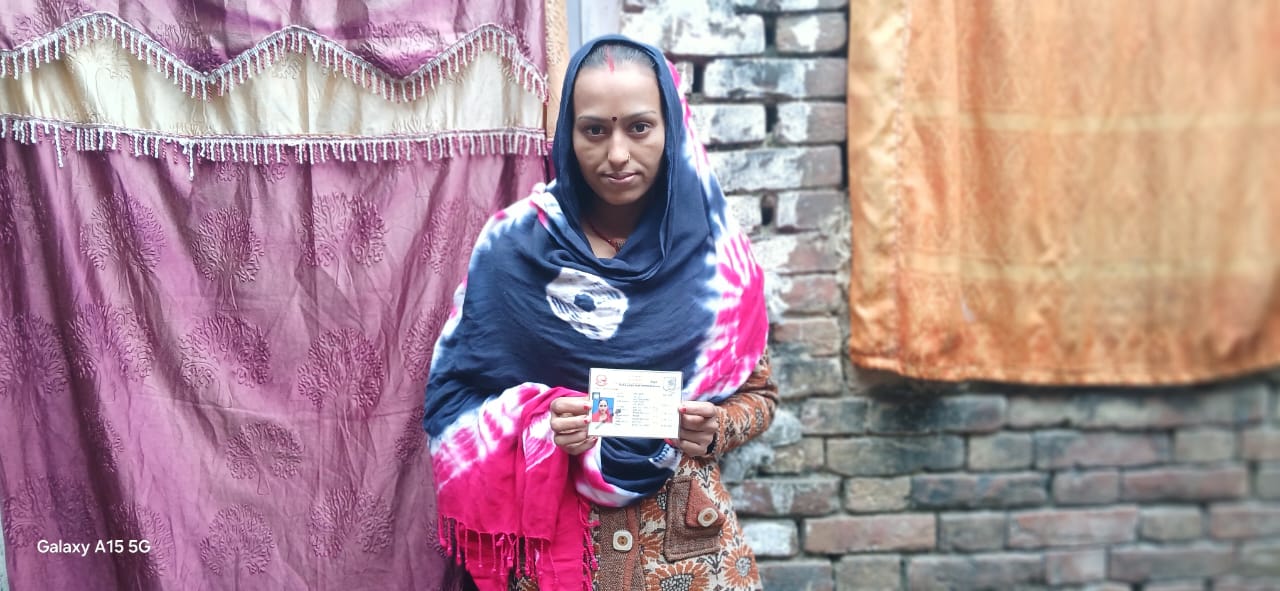
In the heart of Rautahat District, Nepal, Sarita Kumari lived a life unseen. At 22, she was a mother cradling her 8-month-old daughter, a wife building a home, yet to the world, she was a ghost - no citizenship, no rights, no name.
Born in India, Sarita crossed the border to marry Bablu Mandal, an 18-year-old from Ishnath Municipality. They settled in Rautahat, one of Nepal’s most marginalized districts, dreaming of a simple life. But statelessness cast a long shadow. Neither Sarita nor Bablu had Nepali citizenship because she was an Indian, and Bablu was still a minor. Without citizenship, Sarita couldn’t open a bank account and avail of services only possible with it. Barred from social protection like the Poshan Bhatta (allowance), her dreams felt like whispers in the wind.
But for Sarita, holding only an Indian Aadhaar card, the card revealed a deeper barrier: she was one of over 500 women in Rautahat without a Nepali citizenship. Stateless, they were locked out of opportunities. The project, though, was more than seeds and gardens. It was a beacon of empowerment. Through community sessions, Sarita and Bablu discovered their right to citizenship. With the ward office’s recommendation, Sarita opened a bank account using her Indian Citizenship — a small victory. But the real spark came when Bablu claimed his Nepali citizenship, lighting a path for Sarita.
Under Nepal’s Constitution (2072, Article 11), Sarita secured naturalized citizenship through Bablu’s status. They registered their marriage, a milestone that unlocked social protection’s.
Their daughter now receives the Poshan Bhatta (allowance), and Sarita accesses services she once thought were for others. Her Kisan Card funded a vibrant nutrition garden, bursting with organic vegetables that nourish her family. But citizenship gave her something greater: dignity.
In seven months, over 150 women in Rautahat followed, claiming citizenship and rewriting their stories.
The impact runs deeper. Bablu, once stateless, now shares household chores and dreams with Sarita. Their home hums with laughter, fresh greens on the table, and plans for their daughter’s education. Sarita’s confidence has grown, she speaks up in community meetings, inspiring others.
Across five Municipalities in Rautahat, the Poshan project identified over 500 stateless women. In seven months, over 150 have gained citizenship, and many registered marriages.
Sarita’s garden yields diverse crops, ensuring her family’s nutrition. Her story echoes in other women like Sakina Khatun, Gudiya Kumari, and Puja Devi, each stepping into their rights.
Sarita’s triumph is a testament to the Poshan Project’s unexpected power. Designed for nutrition, it became a catalyst for legal recognition and equal rights for women and girls. By giving women like Sarita a name, CARE Nepal and its partners are rewriting family legacies and sparking hope across Rautahat. As Sarita’s courage inspires her neighbors, it proves a timeless truth: when a woman rises, she lifts her family, her community, and beyond. Rautahat is stirring, and the change is just beginning.